Finding the right rental property is an important decision that can affect your comfort, finances, and everyday lifestyle. Whether you are searching for an apartment, house, or commercial space, choosing a property requires more than checking photographs and agreeing on monthly rent. Understanding the property's condition, rental agreement, ownership details, location, and documentation can help you avoid unnecessary complications.
Many tenants rush into rental arrangements because of attractive locations, affordable prices, or limited availability. However, overlooking important details before moving in can lead to unexpected expenses, disagreements with property owners, and difficulties during the tenancy.
Following a proper checklist before renting a property can help you make an informed decision and enjoy a more organized rental experience.
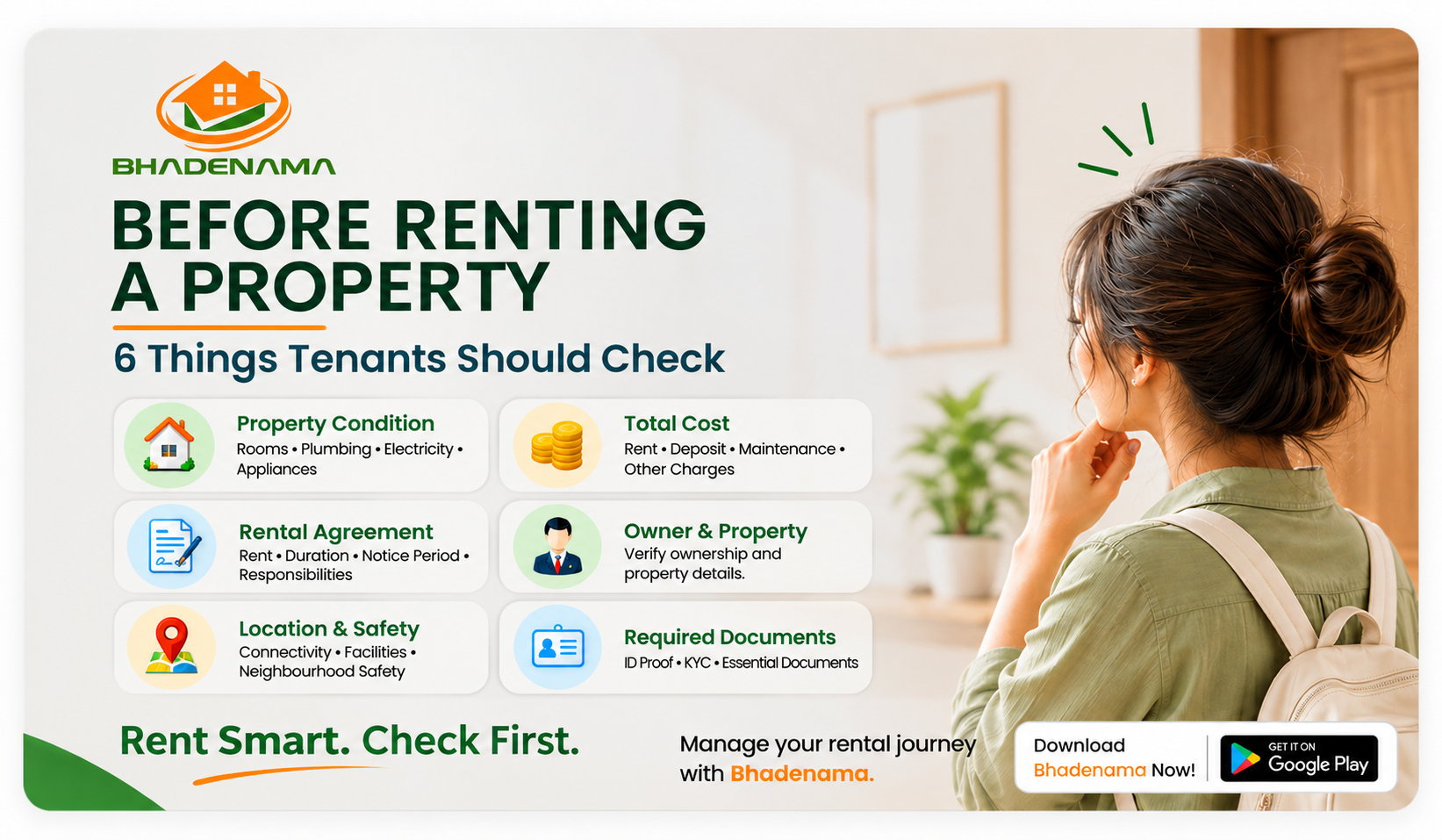
In this guide, we explain 6 important things tenants should check before renting a property, along with practical tips for a smoother rental journey.
Why Is It Important to Check a Property Before Renting?
Renting a property involves financial commitments and responsibilities for both tenants and landlords. A property that appears suitable initially may have hidden maintenance issues, unclear rental terms, or additional costs that affect your budget.
Checking important property details before signing a rental agreement helps you:
Understand the actual condition of the property.
Avoid unexpected maintenance expenses.
Identify additional rental charges.
Clarify responsibilities between tenants and landlords.
Verify relevant property and owner details.
Maintain proper documentation.
Reduce the possibility of rental disputes.
A little preparation before moving in can save considerable time and effort throughout your rental journey.
1. Check the Property Condition Before Moving In
One of the first things tenants should check before renting a property is its physical condition. Even a well-maintained apartment can have issues that are not immediately noticeable during a quick visit.
Before finalizing the rental property, inspect the following areas carefully.
Rooms and Interior Condition
Check the walls, ceilings, floors, doors, windows, and ventilation. Look for visible cracks, dampness, water leakage, damaged flooring, or signs of poor maintenance.
Plumbing and Electricity
Make sure the water supply, taps, drainage, electrical switches, and sockets are functioning properly. Check whether essential appliances, fans, and lights are working as agreed.
Security and Locks
Inspect the main door, window locks, and other security features. Confirm that the property provides reasonable security for your belongings and daily activities.
Document Existing Damage
Before moving in, take photographs or videos of existing damage and share relevant observations with the property owner.
Maintaining a record of the property's condition can help prevent disagreements about damage or repairs when you move out.
2. Understand the Total Cost of Renting a Property
Monthly rent is only one part of the overall cost of renting a property. Tenants should understand all financial obligations before agreeing to rental terms.
Important Rental Expenses to Consider
Monthly Rent: The amount payable every month.
Security Deposit: The amount collected by the owner as security, subject to agreed refund conditions.
Maintenance Charges: Expenses related to building maintenance or common facilities.
Utility Bills: Electricity, water, gas, and other applicable charges.
Parking Charges: Additional fees for parking facilities, where applicable.
Other Expenses: Any additional charges clearly agreed upon by the parties.
Ask the owner about payment deadlines, acceptable payment methods, and the conditions under which the security deposit will be refunded.
Understanding these expenses helps tenants calculate their rental budget more accurately and avoid financial surprises.
3. Read and Understand the Rental Agreement
A rental agreement is an important document that explains the terms and conditions of the rental arrangement between the property owner and tenant.
Before signing a rental agreement, read every section carefully and clarify any unclear terms.
Key Details to Check in a Rental Agreement
Rent and Payment Schedule: Confirm the monthly rent, payment date, and agreed payment method.
Rental Duration: Understand the start date, duration, and renewal conditions of the agreement.
Security Deposit: Check the deposit amount and the conditions for its refund or deductions.
Notice Period: Understand how much advance notice is required when either party wishes to end the tenancy.
Maintenance Responsibilities: Clarify which repairs and maintenance expenses are the responsibility of the tenant and which are handled by the owner.
Property Usage Rules: Check any restrictions regarding pets, subletting, modifications, or permitted use of the property.
Rent Revision: Understand whether rent can be revised during the tenancy and under what conditions.
A properly understood rental agreement helps establish clear expectations and reduces the possibility of misunderstandings between landlords and tenants.
Keep a signed copy of the agreement and important related documents for future reference.
4. Verify the Property Owner and Property Details
Verifying the property owner and relevant property information is an important step before renting a property.
Online listings and informal conversations may not always provide enough information to confirm whether someone is authorized to rent a property.
Before making a deposit or signing an agreement, consider the following steps:
Request appropriate identification from the property owner or authorized representative.
Confirm the property address and details.
Ask for reasonable proof of ownership or authorization to rent the property.
Ensure the owner or authorized representative's details are accurately mentioned in the agreement.
Verify that the property being shown matches the information provided.
Clarify who will handle maintenance and other property-related responsibilities.
Avoid transferring money without appropriate verification. Be particularly cautious if someone demands immediate payment without allowing you to inspect the property or review the relevant documents.
Taking these precautions can help tenants make more informed rental decisions.
5. Evaluate the Location, Connectivity, and Safety
The location of a rental property can significantly influence your daily routine, convenience, and overall living experience.
A property may look attractive and affordable, but an inconvenient location can increase transportation costs and affect your lifestyle.
Location Factors to Consider
Connectivity: Check the availability of public transportation, roads, and convenient travel routes.
Workplace or Education: Consider the distance from your office, college, or other frequently visited locations.
Essential Facilities: Look for nearby grocery stores, pharmacies, hospitals, schools, and other necessary services.
Neighborhood Safety: Evaluate street lighting, surroundings, accessibility, and general neighborhood conditions.
Internet and Mobile Connectivity: Check whether reliable internet and mobile network services are available.
Parking and Accessibility: Confirm parking availability and whether the property is convenient for your daily requirements.
If possible, visit the neighborhood at different times of the day. This can help you understand traffic conditions, noise levels, and the overall environment.
Choosing a suitable location is just as important as selecting the property itself.
6. Prepare and Verify the Required Documents
Documentation plays an important role in creating a transparent rental arrangement. Both landlords and tenants should understand the documents required before completing the rental process.
Common Rental Documents
Depending on the property and applicable requirements, tenants may need:
Identity proof.
Address proof, where required.
Tenant verification or KYC documents.
Signed rental agreement.
Rent payment receipts.
Move-in inspection records.
Relevant property and owner information.
Tenants should provide personal documents only through appropriate channels and avoid sharing sensitive information unnecessarily.
Keep copies of important rental documents in an organized folder. Digital storage can make documents easier to access when required, provided appropriate privacy and security measures are followed.
Maintaining organized records of agreements, payments, and property condition can help both parties manage their rental responsibilities more effectively.
How Organized Rental Property Management Improves the Rental Experience
Rental property management is not limited to collecting rent or signing agreements. It also involves maintaining property information, managing tenant records, tracking payments, organizing documents, and handling maintenance responsibilities.
For landlords managing multiple properties, maintaining these records manually across spreadsheets, notebooks, emails, and messaging applications can become difficult.
A structured rental management system helps bring important rental information together and makes everyday management more convenient.
For tenants, clear communication, proper documentation, and transparent rental terms contribute to a better rental experience.
For landlords, organized property and tenant records can support smoother rental operations and better record keeping.
Simplify Rental Property Management with Bhadenama
Bhadenama is a smart rental management platform designed to help landlords and property managers organize their rental activities.
With Bhadenama, users can manage property details, tenant information, rental agreements, rent payment records, maintenance information, and important rental documents in one organized system.
Instead of managing rental information across multiple disconnected records, landlords can bring essential rental management activities into a more structured digital environment.
Bhadenama supports organized rental management by helping users maintain important information related to their properties and tenants.
Explore Bhadenama
Website: https://bhadenama.com/
Download the App: https://play.google.com/store/apps/details?id=com.quickensol.bhadenama
Business Inquiry: +91 98765 43210
Conclusion
Renting a property requires careful consideration of several important factors. Checking the property condition, understanding the total rental cost, reviewing the rental agreement, verifying owner details, evaluating the location, and preparing the required documents can help tenants make better rental decisions.
Following a rental checklist before moving in can reduce avoidable complications and make the rental experience more organized.
Whether you are renting your first apartment or moving into a new property, taking time to verify important details is always worthwhile.
Rent Smart. Check First. Manage Better with Bhadenama.