Owning a rental property can be a valuable long-term investment, but managing it requires regular attention. Landlords need to maintain property information, communicate with tenants, track rental payments, organize agreements, and keep important documents updated. When all these activities are handled separately, even a small rental portfolio can become difficult to manage.
This is where a property management app can make a difference. By bringing essential rental information into a digital workflow, landlords can improve recordkeeping, simplify routine tasks, and manage their responsibilities with greater clarity.
Rather than relying on scattered messages, handwritten notes, and multiple spreadsheets, property owners can adopt a more organized way to manage their rental operations.
In this guide, we explore how property management apps work, which everyday challenges they can address, and how Bhadenama can support a more organized rental management process.
Understanding the Role of a Property Management App
A property management app is a digital solution that helps property owners organize information and activities related to their rental properties. Depending on the platform, it may include tools for property records, tenant information, rental agreements, rent tracking, and document management.
The purpose is not simply to move paperwork online. It is to create a consistent process for maintaining rental information and making it easier to retrieve when required.
For example, imagine a landlord managing three apartments. Each apartment has a different tenant, rental agreement, payment history, and set of maintenance requirements. Keeping these details in separate notebooks or spreadsheets can make it difficult to find the right information quickly.
A suitable property management app can help organize these details by property and tenant, giving the landlord a clearer overview of rental activities.
The Everyday Problems Landlords Face
Rental management challenges are not always complicated. Often, they arise from small tasks that accumulate over time.
1. Rental Information Is Spread Across Different Places
A tenant's phone number may be saved on a mobile device, the rental agreement may be stored in an email, and payment details may exist in a spreadsheet. Finding all the relevant information can require unnecessary effort.
An organized digital system helps reduce this fragmentation by bringing supported information together.
2. Rent Records Require Regular Attention
Landlords need to know which payments have been received and maintain a record of previous transactions. Without consistent updates, it becomes harder to review payment history or identify outstanding amounts.
A rent management app or a property management app with rent-tracking features can help maintain more structured records.
3. Important Documents Are Difficult to Retrieve
Rental agreements and other property documents may be needed when reviewing terms, resolving misunderstandings, or updating rental arrangements.
Organizing these documents digitally can make retrieval easier, provided the chosen platform supports appropriate document storage and access.
4. Managing More Properties Means More Coordination
The work involved in managing rental properties often increases as the number of tenants and units grows. Landlords must maintain separate information while ensuring that each record remains accurate.
A structured property management process helps make these responsibilities easier to oversee.
Five Ways a Property Management App Can Improve Your Workflow
1. Create a Clear Record for Every Property
Each rental property has its own details, rental arrangements, and history. Keeping property information organized makes it easier to distinguish one unit from another.
A digital platform can help landlords maintain relevant property records and connect them with associated tenant information.
Practical tip: Use a consistent naming system for every property so that records are easy to identify and update.
2. Keep Tenant Information Organized
Tenant management involves maintaining relevant contact details, rental information, and associated documentation. Disorganized records can slow down routine communication and make it harder to locate information.
A property management app with tenant management features can help create a more structured recordkeeping process.
Practical tip: Review tenant information periodically and update records whenever an important detail changes.
3. Maintain Clear Rent Payment Records
A reliable payment record helps landlords understand the history of rental transactions. It can also make it easier to review payments when questions arise.
Depending on the platform, rent-tracking features may allow landlords to record payments, check payment status, and review previous entries.
Practical tip: Update payment records promptly and keep supporting transaction information where appropriate.
4. Organize Rental Agreements and Documents
Rental agreements outline the terms agreed upon by landlords and tenants. Keeping agreements organized can help both parties refer to the relevant information when needed.
Digital documentation can reduce dependence on physical folders, but landlords should verify the platform's storage, security, and agreement-management capabilities before relying on it.
Practical tip: Maintain clearly named files and keep important documents current and accessible only to authorized people.
5. Establish a Repeatable Management Routine
Property management becomes easier when routine tasks follow a consistent process. Regularly reviewing rent records, checking documents, updating tenant details, and maintaining property information helps reduce the likelihood of overlooked administrative work.
A digital management system can support this routine by making relevant records easier to access.
Practical tip: Set aside a regular time each week or month to review your rental records and address pending tasks.
Is a Property Management App Worth Using for a Small Portfolio?
Some landlords assume that digital property management tools are useful only for large real estate businesses. In reality, even owners with one or two rental properties may benefit from better record organization.
Consider a landlord who manages two flats. One tenant has recently renewed an agreement, while the other has made a rental payment. The landlord also needs to retrieve an earlier payment record.
If these details are stored across different files and conversations, finding the correct information may take several steps. An organized digital process can make the same information easier to locate.
For smaller portfolios, the priority should be simplicity. Choose a solution that supports your essential requirements without adding unnecessary complexity or expense.
What Should You Check Before Choosing a Property Management App?
Not every platform offers the same capabilities. Before choosing one, evaluate the following factors.
Essential functionality: Confirm whether the app supports property records, tenant information, rent tracking, and document organization.
Ease of use: The platform should be straightforward enough to fit into your regular management routine.
Data privacy and security: Review the provider's privacy policy, data handling practices, access controls, and available backup options.
Pricing and limitations: Understand any subscription fees, usage limits, or additional charges before committing.
Access and compatibility: Check which devices the app supports and whether an internet connection is required for the functions you need.
Room for growth: Consider whether the platform can accommodate additional properties or tenants as your portfolio expands.
The most suitable app is the one that solves your actual problems and fits your working style.
How Bhadenama Supports Organized Rental Management
Bhadenama is a rental management platform designed to help landlords and property owners organize important rental activities digitally.
Instead of depending entirely on disconnected records, landlords can use Bhadenama to support a more structured approach to property and tenant information.
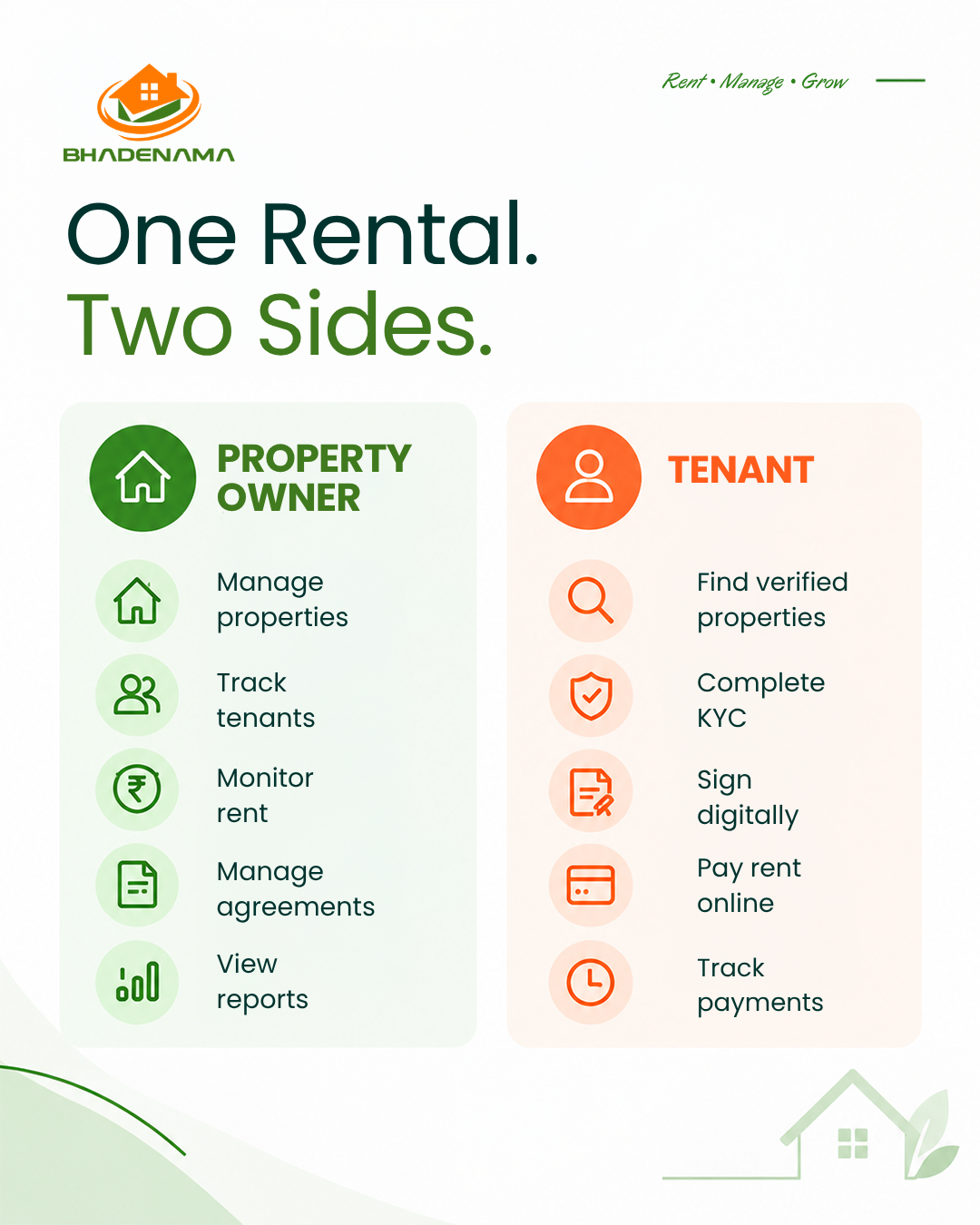
The platform focuses on key areas such as:
- Property management: Organizing rental property information.
- Tenant management: Maintaining tenant-related records.
- Digital rental agreements: Managing rental agreement documentation.
- Rent tracking: Keeping rental payment information organized.
- Payment records: Maintaining relevant rental transaction records.
- Document management: Organizing important rental documents.
- Occupancy tracking: Maintaining property occupancy information.
These capabilities can help property owners create a clearer process for managing rental information. The features available to each user should be checked against their specific requirements.
Bhadenama is worth exploring if you want to bring greater organization to your rental management routine.
Visit the official website: https://bhadenama.com/
Download Bhadenama: https://play.google.com/store/apps/details?id=com.quickensol.bhadenama
Business Inquiry: +91 96042 29900
Property Management App vs. Spreadsheets and Paper Records
Spreadsheets and paper records can be useful for basic rental administration, particularly when managing a small number of properties. However, these methods often require landlords to maintain information manually and keep track of where each document is stored.
A property management app can offer a more structured alternative, depending on its features.
For example, a spreadsheet may record rent payments effectively, but tenant information, rental agreements, and property documents might still need to be managed separately. A suitable app may allow these records to be organized within a more connected workflow.
The key difference is not that manual methods never work. It is that a digital platform can reduce the effort involved in maintaining and retrieving information when the right features are available.
Landlords should choose their approach based on the complexity of their rental operations, their budget, and the level of organization they require.
Common Mistakes to Avoid When Using Rental Management Software
Adopting a digital platform is only one part of improving rental management. How you use it also matters.
Entering Incomplete Information
Missing or outdated tenant details can reduce the usefulness of your records. Establish a routine for reviewing and updating information.
Ignoring Payment Record Updates
A digital system cannot maintain accurate payment history if transactions are not recorded correctly. Update records consistently and verify important entries.
Overlooking Document Security
Rental records may contain sensitive personal and financial information. Use appropriate access controls and follow secure document-handling practices.
Choosing More Features Than You Need
An overly complicated platform can make routine tasks harder rather than easier. Prioritize the features that address your actual requirements.
Assuming Software Replaces Legal Responsibilities
A property management app can support organization and documentation, but it does not replace the need to understand applicable rental laws, maintain valid agreements, or fulfil financial and legal obligations.
Frequently Asked Questions
1. What is a property management app used for?
A property management app helps landlords organize property details, tenant information, rental agreements, rent records, and other rental-related activities. Its specific capabilities depend on the platform.
2. Can a property management app help manage multiple rental properties?
Yes. A suitable app can help landlords organize information by property and tenant, making it easier to maintain separate records and oversee their rental portfolio.
3. What is the difference between a rent management app and a property management app?
A rent management app primarily focuses on rental payment records and related tasks. A property management app may cover a broader set of activities, including property records, tenant information, agreements, documents, and rent tracking.
4. Do small landlords need rental management software?
Not every landlord needs specialized software. However, landlords who want more organized records, easier document retrieval, and a consistent management process may find a suitable digital platform useful.
5. How can Bhadenama help landlords?
Bhadenama supports rental management by helping landlords organize property information, tenant records, digital rental agreements, rent tracking, payment records, documents, and occupancy information.
Conclusion: Build a More Organized Rental Management Process
Managing rental properties effectively depends on more than collecting rent. It also requires consistent recordkeeping, organized documentation, and a reliable process for handling tenant and property information.
A property management app can help bring these responsibilities into a more structured digital workflow. By choosing the right features and keeping information updated, landlords can make everyday rental administration more convenient and manageable.
Bhadenama offers a digital platform for property owners who want to organize their rental management activities and move towards a more systematic way of working.
Explore Bhadenama to discover how digital tools can support your rental management routine.
Website: https://bhadenama.com/
Download the app: https://play.google.com/store/apps/details?id=com.quickensol.bhadenama
Business Inquiry: +91 96042 29900